
What affects the price?
- Torsion or extension spring system
- Single spring or matched pair
- Door weight and size
- Spring wire diameter and cycle rating
- Condition of cables, rollers and drums
- Ease of access to the spring assembly
Signs your garage door spring is failing
Most homeowners notice the problem the moment they try to open the door. It feels unusually heavy, barely moves, or does not move at all. Some hear a loud bang from the garage, which is often the sound of the spring snapping under tension. Others see a visible gap in the coil above the door.
The garage door opener may also strain, jerk, or reverse partway through the cycle because it is trying to lift a door that no longer has spring support. If the door closes fast and hard instead of gliding down, that is another sign the spring can no longer control its weight.
What is actually going wrong with the spring
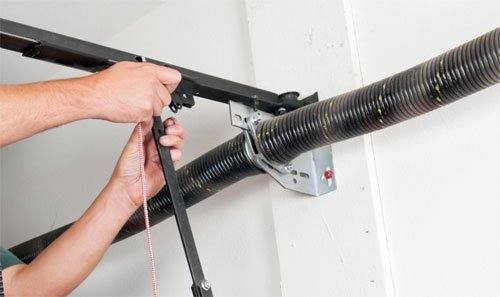
Garage door springs store energy and release it in a controlled way to lift and lower the door. Torsion springs sit above the door and twist, while extension springs run along the upper tracks and stretch. Both types weaken from repeated cycling and from metal fatigue, and eventually a coil cracks or breaks completely.
Every spring has a cycle rating, meaning a set number of times it can open and close before it wears out. Texas heat and humidity swings speed up corrosion and metal fatigue, which is why springs in this area often fail sooner than their rating suggests, especially on doors used several times a day.
Repair options and when full replacement makes more sense
If only one spring in a pair has broken, it is possible to replace just that spring. Most technicians recommend replacing both springs together when a door uses a matched pair, because the remaining spring is usually close to the end of its own lifespan and will likely fail soon after.
Replacing both at the same time also keeps the door balanced on each side, which reduces strain on the opener, cables and rollers. Single spring replacement can make sense on a newer system with only one spring installed, or when the second spring is verifiably new and still well within its cycle rating.
What the price covers and what moves it within the range
Spring replacement in the Dallas-Fort Worth area typically runs from $150 to $450. That price covers the inspection, the spring or springs, labor, and a safety test once the work is done. A single standard torsion spring on an easy to access system tends to land toward the lower end.
Cost moves higher for a matched pair, for high cycle rated springs built to last longer, for oversized or custom doors that need heavier springs, and for systems where cables, drums or rollers also need attention while the technician has the door open. Difficult access or an older, non-standard setup can add to labor time as well.
How the appointment goes from arrival to finished repair
The technician starts by inspecting the whole door system, not just the broken spring. That includes the cables, rollers, tracks, hinges and opener, since a failed spring often puts extra strain on those parts. You get a plain explanation of what failed and why, along with the repair options and a confirmed price before any work begins.
Once you approve the work, the old spring is removed and the new one is installed and adjusted to match the door's weight. The technician then tests the door through a full open and close cycle, checking balance and smooth travel before calling the job done.
Why spring tension makes this a job worth doing carefully
A wound torsion spring holds a significant amount of stored energy, and an extension spring under load can snap back hard if it lets go unexpectedly. Handling either type without the right tools and technique is a common way people get hurt trying to save money on a repair.
A professional replacement uses the correct winding bars, clamps and safety cables to control that tension throughout the process. After installation, the door is tested for balance and safe travel so it stops and reverses properly, and covered work comes with a 12-month warranty.
How to make a new spring last as long as it should
A light coat of garage door lubricant on the spring coils a couple of times a year cuts down on friction and rust, which helps the spring reach its full cycle life. Keeping the door and tracks clean of dirt and debris also reduces the load the spring has to work against.
Avoid hanging extra weight on the door, such as storage racks or heaters, since that changes the balance the spring was set for. If the door starts to feel heavy or off balance again, have it checked rather than letting the opener compensate, since that strain shortens the life of the new spring.
When to call right away and when it is fine to wait a bit
Call as soon as you notice a broken spring, a door that will not open, or a loud bang from the garage. A door stuck in the open position is a security risk, and one stuck closed can leave a vehicle trapped inside. Same-day appointments are available when scheduling allows.
If the door still opens and closes but sounds strained, moves unevenly, or feels heavier than usual, you can typically schedule within a few days rather than treating it as an emergency. Waiting too long, though, raises the odds of a sudden full break that stops the door completely.
What the appointment includes
Full system inspection
The technician checks the springs, cables, rollers, tracks, hinges, opener and safety sensors to confirm the spring is the actual cause of the problem and to catch any related wear before it becomes its own repair.
Clear options before work begins
You get a plain explanation of what failed, whether a single spring or a matched pair makes sense for your door, and a confirmed price for the work before anything is approved.
Installation and safety test
The new spring is installed and adjusted to the door's weight, then the door is run through a full cycle to check balance and smooth, safe travel. Covered work includes a 12-month warranty.
Frequently asked questions
How long does spring replacement usually take?
Most spring replacements take under an hour once the technician is on site, though a matched pair or a door needing additional cable or roller work can take longer. The technician gives you a time estimate after the inspection.
Can I replace just one spring instead of both?
Yes, if the door uses a single spring or if the second spring in a pair is newer and still well within its cycle rating. For older matched pairs, replacing both at once is usually the more practical choice.
Why did my spring break after only a few years?
Cycle count matters more than calendar age. A door used several times a day reaches its spring's rated cycles faster than one used occasionally, and heat, humidity and rust can speed up wear further.
Is it dangerous to leave a broken spring unrepaired?
A broken spring puts the full weight of the door on the opener and cables, which can lead to further damage or a sudden drop. It also makes the door unsafe to open or close by hand.
Do you offer same-day spring replacement?
Same-day appointments are available when scheduling allows. Call (214) 307-6420 to check current availability for your area.
Will the new spring match the rest of my door hardware?
Yes, the technician selects a spring based on your door's weight, size and cycle needs so it works correctly with your existing cables, drums and opener rather than just fitting the space.