
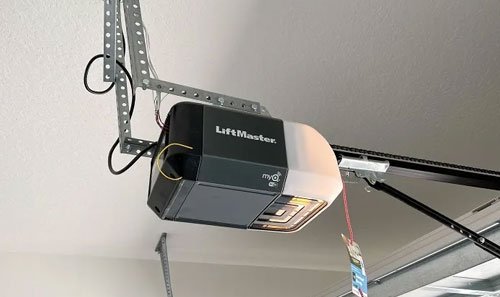
What affects the price?
- Motor and gear condition
- Sensor or control issue
- Parts availability
- Opener age and brand
- Chain, belt or screw drive type
- Circuit board or wiring damage
Signs your garage door opener is failing
The remote does not work, the wall button does nothing, or the door only responds after several tries. Some homeowners hear the motor running but the door does not move at all, which usually points to a stripped gear or a broken drive component rather than a dead motor.
Other common signs include the door reversing right after it starts closing, a light on the opener that blinks instead of staying solid, or the unit making a grinding or straining noise partway through the cycle. Any of these point to a specific, findable problem, not a mystery.
Why openers stop working properly
Most opener failures trace back to a handful of causes: worn plastic drive gears that strip under load, a drive belt or chain that has stretched or slipped off track, misaligned or dirty safety sensors, or a motor capacitor that has weakened with age and can no longer deliver the power needed to lift the door.
Circuit boards can also fail from power surges or years of heat exposure in the garage, and older logic boards sometimes stop reading remote signals correctly. In many cases the opener itself is fine but the door it is trying to move has become heavier to lift because of a failing spring, which puts extra strain on the motor.
Repairing the opener versus replacing it
Repair usually makes sense when the motor is sound and the problem is isolated to one part, such as a gear kit, a sensor, a capacitor, or a logic board. These repairs are straightforward, keep the cost on the lower end of the range, and restore full function without touching a unit that still has useful life left.
Replacement becomes the smarter move when the opener is more than ten to fifteen years old, when repeated repairs have not solved the underlying issue, or when parts for that model are no longer available. At that point, paying for another repair on a unit near the end of its service life often costs more over time than installing a new one.
What changes the cost between $75 and $300
The lower end of the range covers simple fixes: realigning or cleaning safety sensors, reprogramming remotes, tightening chain or belt tension, or replacing a worn limit switch. These jobs take less time and use inexpensive parts, which keeps the total cost down.
The higher end applies to more involved repairs, such as replacing a motor capacitor, swapping out a stripped gear kit, repairing wiring damage, or diagnosing a failing circuit board. Brand and age also matter, since parts for older or less common opener models can cost more or take longer to source.
What happens during the opener repair visit
The technician inspects the opener along with the rest of the door system, since a struggling spring, worn cable, or misaligned track can cause symptoms that look like an opener problem but are not. This full check prevents paying for a repair that does not actually fix the issue.
Once the cause is identified, you get a plain explanation of what failed and why, along with the repair options and a confirmed price before any work starts. After the repair, the opener is tested through several full cycles to confirm it runs smoothly and stops and reverses correctly. You can reach the office at (214) 307-6420 to set up a visit.
Why opener problems are a safety issue
A garage door opener is not just a convenience feature. The auto-reverse function and safety sensors exist to stop the door from closing on a person, pet, or object, and a malfunctioning opener can disable that protection without any obvious warning.
A door that reverses unpredictably, closes too fast, or does not respond to the sensors at all should be treated seriously. Continuing to use an opener with a known safety issue risks injury and property damage, and it is one of the clearer cases where a repair should not be put off.
Keeping your repaired opener working longer
Wipe down and check the safety sensors every few months, since dust, spider webs, or a bumped bracket are common reasons an opener stops working correctly. Keep the area around the sensors clear and make sure both units still face each other directly.
Lubricate the chain, belt, or screw drive as recommended for your opener type, and avoid forcing the door manually if the opener seems to be struggling. A yearly maintenance and tune-up, priced separately from repair work, helps catch small wear issues in the gears or drive system before they turn into a failed motor or a stripped gear.
When to call now and when it can wait
Call as soon as possible if the door will not close all the way, the safety sensors are not lighting up, the opener grinds or strains, or the door reverses without anything blocking its path. These point to safety or mechanical issues that tend to get worse with continued use.
It is reasonable to wait a short time if the only issue is a remote with reduced range or a minor delay in response, as long as the door still opens, closes, and stops correctly. Even then, it is worth scheduling a check before the small issue turns into a full opener failure.
What the appointment includes
Full system inspection
The technician checks the door, springs, cables, rollers, tracks, hinges, opener, and safety sensors to find the real cause of the problem instead of guessing based on one symptom.
Clear options before work
You get a plain explanation of what failed, the repair choices available, and a confirmed price before any approved work begins on your opener or the rest of the door system.
Repair and safety test
After the repair, the opener is tested through multiple cycles to confirm proper travel, force, and safety reversal. Covered work carries a 12-month warranty.
Frequently asked questions
How long does a typical garage door opener repair take?
Most opener repairs, such as sensor realignment, remote programming, or gear replacement, are completed within one visit. More involved issues like a circuit board or motor problem may take longer if a part needs to be sourced.
Can you repair any brand of garage door opener?
Technicians work on most common residential and commercial opener brands and drive types, including chain, belt, and screw drive systems. If a part is unusual or discontinued, that gets confirmed with you before any work begins.
What does it mean if the opener runs but the door does not move?
This usually points to a broken drive component, such as a stripped gear, snapped chain, or disconnected trolley, rather than a motor failure. It is a common issue that a technician can usually diagnose quickly during inspection.
Do you offer same-day opener repair appointments?
Same-day appointments are available when scheduling allows. Since opener issues can affect the safety of the door, it is worth calling as soon as you notice a problem to get on the schedule.
Is opener repair work covered by a warranty?
Yes, covered repair work comes with a 12-month warranty. The technician will confirm what is included in the warranty for your specific repair before the work is approved.
How do I know if I need a new opener instead of a repair?
If the opener is older, has failed more than once, or needs a part that is hard to find, replacement is often the better long-term value. The technician will lay out both options and the pricing for each before you decide.