
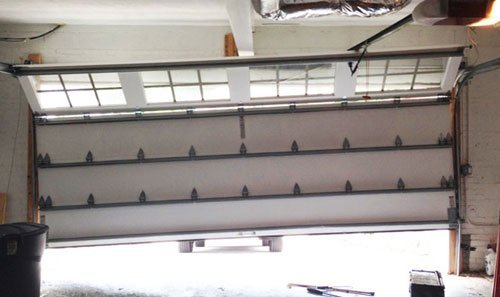
What affects the price?
- Which part failed, such as a spring, cable, roller, or track
- How many components need replacement versus adjustment
- Door size and weight, single car versus double car
- Brand and availability of matching replacement parts
- Access conditions, including tight garages or high ceilings
- Extra damage found during inspection, like a bent track or worn hinges
Signs your garage door needs repair, not just a tune-up
Your door might stick partway up, jerk as it moves, or stop responding to the remote altogether. Some homeowners hear a loud bang followed by the door slamming shut on its own. Others notice grinding, popping, or scraping sounds every time the door runs through its cycle.
A door that looks crooked in the opening, sags on one side, or takes noticeably longer to open than it used to is telling you something is wrong. These are not cosmetic issues. They point to a specific part that has worn out, snapped, or come loose and needs attention before the door stops working completely.
What is failing inside the door system and why
Garage doors rely on springs, cables, rollers, and tracks working together under constant tension and repeated motion. Over time, springs lose their coil strength, cables fray from friction, rollers wear down or crack, and tracks bend from small impacts or age. Any one of these can throw off the balance of the entire door.
Texas heat and cold swings also play a role. Metal expands and contracts, lubricant dries out faster, and hardware loosens with repeated use. A door that ran fine for years can suddenly fail once one worn part finally gives out, which is why the problem often seems sudden even though it built up gradually.
Repairing the part versus replacing the whole assembly
Most garage door problems come down to one or two failed parts. A snapped cable, a worn roller, or a bent hinge bracket can usually be replaced on its own without touching the rest of the system. This keeps the repair contained and the cost on the lower end of the range.
Replacement of a larger assembly makes more sense when multiple parts have failed together, when the door is old enough that matching parts are hard to find, or when a track is bent badly enough that straightening it will not hold. The technician will explain which situation applies to your door and why before recommending either path.
What the $175 to $389 range covers and what changes it
The lower end of this range typically covers a single worn part, such as one roller, a hinge, or a minor cable repair, on a standard single car door with easy access. The higher end applies to jobs with more than one failed part, heavier double car doors, or repairs that require extra labor because of tight clearance or an awkward mounting position.
Brand and part availability also affect price. A common part found on most trucks costs less than a less common one that has to be sourced. The technician will walk you through exactly which factors apply to your door and confirm the total before starting any work.
What happens when the technician arrives
The technician starts by running the door through a full cycle to see and hear how it behaves, then inspects the springs, cables, rollers, tracks, hinges, and opener to find the source of the problem. This step matters because a symptom in one part of the system is often caused by wear somewhere else entirely.
Once the cause is confirmed, you get a plain explanation of what failed, the repair options available, and the price before anything is fixed. If same-day availability allows, the repair can often be completed during that same visit, so the door is back in working order without a second trip out to your home.
Why a broken door is a safety risk for your family
A garage door out of balance or held by a frayed cable is under serious tension. If a spring or cable lets go while the door is in motion, it can drop suddenly, which puts anyone standing nearby, including kids or pets, at real risk. A door that no longer reverses properly when it hits an obstruction is another warning sign that should not be ignored.
Repairing the failed part restores the balance and tension the system depends on to move safely. After the repair, the door is tested for smooth travel and proper response before the technician leaves, so you know it is operating the way it should.
How to keep the repair from coming undone
Once the repair is done, a few habits help it last. Keep the tracks clear of dirt and debris, avoid forcing the door if it feels stuck, and listen for new sounds that might signal another part starting to wear. Catching a small issue early is almost always cheaper than waiting for it to cause a second failure.
A yearly lubrication of hinges, rollers, and tracks reduces friction and slows down wear on the parts that were just replaced. Covered repairs come with a 12-month warranty, so if the same issue returns within that period, it is addressed without starting the diagnosis over from scratch.
When to call today and when it can wait
A door that is grinding, off balance, or moving unevenly should be looked at soon, since these signs usually mean a part is close to failing completely. Waiting often turns a contained repair into a bigger job once a second part gives out from the added strain.
If the door has already stopped moving, dropped suddenly, or come off its track, stop using it and call right away at (214) 307-6420. A door in that condition is not safe to operate and should not be forced open or closed until a technician has checked it.
What the appointment includes
Full system inspection
The technician checks the springs, cables, rollers, tracks, hinges, opener, and safety sensors to pinpoint exactly what caused the problem, rather than just treating the symptom you noticed.
Clear options before work begins
You get a plain explanation of what failed, the repair choices available, and the confirmed price before any work starts, so there are no surprises once the job is underway.
Repair and safety test
After the repair, the door is run through a full cycle to check balance, travel, and safe operation. Covered work includes a 12-month warranty on parts and labor.
Frequently asked questions
How fast can someone come look at my garage door?
Same-day appointments are offered when availability allows. Call to check current openings for your area, especially if the door has stopped working or come off its track.
Will I know the price before any repair starts?
Yes. The technician inspects the door, explains what failed and the repair options, and confirms the price before any approved work begins. Nothing is charged without that confirmation.
Can a garage door repair really cost as little as $175?
Yes, for a single worn part like a roller or hinge on a standard door with easy access. Jobs with more failed parts, heavier doors, or tighter access conditions land higher in the range.
Is it safe to keep using the door until the appointment?
If the door is only noisy or slow, light use is usually fine until the visit. If it has dropped suddenly, come off track, or stopped moving, stop using it and wait for the technician.
Do repairs come with any kind of warranty?
Covered repair work includes a 12-month warranty. If the same issue returns within that period, it is addressed without starting the diagnosis process over.
What if the inspection finds more than one problem?
The technician explains everything found, not just the original complaint, and gives you the price for each option. You decide what gets repaired before any work begins.