
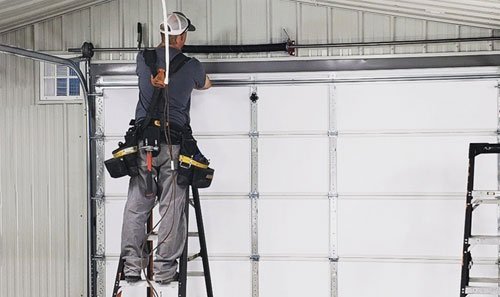
What affects the price?
- Door type, whether it is rolling steel, sectional, or high-speed
- Commercial-grade hardware, which costs more than residential parts
- Access and scheduling around business hours or loading dock traffic
- Extent of the damage, from one failed part to several
- Parts availability, since some commercial hardware is special order
- Safety and code requirements tied to how the door is used
What business owners notice when a commercial door starts failing
Employees might mention a loading dock door that groans halfway up, or a rolling steel door that catches and jerks before it closes. Sometimes the opener runs but the door barely moves, or it slams the last foot instead of settling down slowly. A door that used to close in seconds might now take twice as long, or stop and reverse for no clear reason. These are the signs staff notice first, since the door is part of daily operations.
Other times the problem shows up as a safety concern. The door does not reverse when something is underneath it, or the photo eye sensors blink without actually stopping the door. A commercial door that will not fully close overnight is both a security gap and a weather problem. Any of these signs point to wear or failure somewhere in the system, not something to put off until it stops working entirely.
What is actually failing inside a commercial door system
Commercial doors cycle far more times a day than a home garage door, so springs, cables, rollers, and hinges wear out faster. A spring that would last years on a house door can fatigue in a fraction of that time under heavy daily use. Cables fray from repeated tension, and rollers wear down from constant travel along the track, especially on doors that run several times an hour during a work shift.
Tracks bend from contact with forklifts, delivery trucks, or pallets backing into the frame. Openers strain when they are undersized for the door weight, which shortens their working life. Panels dent from impacts and rust faster near loading areas exposed to weather. Each of these is a separate failure point, and a full inspection is the only way to know which one is actually causing the symptom you are seeing.
When a repair makes sense and when replacement is the smarter call
A repair usually makes sense when the frame and track are still solid and the problem is limited to one part, such as a broken spring, a frayed cable, or a worn opener component. In those cases, fixing the specific failure gets the door back to normal operation without the cost of replacing the whole system.
Replacement becomes the better investment when the door is old and multiple parts are failing at once, when panels are rusted through in several spots, or when the opener has already been repaired more than once for the same issue. It also makes sense when the current door no longer fits the business, such as needing better insulation, a faster cycle time, or a different size opening.
What the price covers and what moves it up or down within $250 to $1,500
The price covers diagnosing the failure, the parts needed, and the labor to install and test them. On the lower end of the range, this typically means a single, straightforward fix such as a cable repair or a minor hardware adjustment on a standard sectional door.
Costs move toward the higher end when the door is a heavier rolling steel or high-speed unit, when more than one part has failed, or when the repair requires special order hardware. Access also matters. A door that requires after-hours scheduling or extra setup around loading dock traffic can add to the labor time and the final price.
How the commercial repair appointment works
A technician arrives and inspects the full door system, including springs, cables, rollers, tracks, hinges, opener, and safety sensors, to find the actual cause of the problem rather than guessing from one symptom. Same-day appointments are available when scheduling allows, which matters when a stuck door is affecting daily business.
Once the cause is identified, the technician explains what is wrong, walks through the repair options, and confirms the price before any approved work begins. After the repair, the door is tested for balance, travel, and safe operation before the technician leaves, so you know it is actually fixed and not just running for the moment.
Why safety checks matter more on commercial doors
Commercial doors are heavier and use stronger springs and cables under more tension than residential doors, which means a failure can be more forceful and more dangerous. A door that reverses inconsistently or fails to detect an obstruction is a hazard to employees and equipment moving through it every day.
This is why a proper repair includes testing the safety sensors, checking that the door reverses correctly, and confirming the door is balanced before signing off on the job. Skipping these checks to save time is how small problems turn into liability issues later.
How to make a commercial door repair last
Regular maintenance and tune-ups catch worn parts before they fail during business hours, which is especially important for doors that cycle many times a day. Keeping the track clean of debris and checking that nothing is obstructing the door's path also reduces strain on the opener and hardware.
Training staff on proper door use, such as not forcing a door that is sticking and reporting unusual noises right away, helps catch problems early. A door that gets attention at the first sign of trouble almost always costs less to fix than one that keeps running until it fails completely.
When to call now and when the repair can wait
Call as soon as possible if the door will not close, does not reverse properly, or is blocking a loading dock or entrance needed for daily operations. These situations affect security, weather protection, and safety, and they tend to get more expensive the longer they sit.
Minor issues, like a slightly noisy roller or a remote that occasionally needs a second try, can often wait a short time for a scheduled visit. Still, because commercial doors cycle heavily, small problems tend to turn into bigger ones faster than they would on a residential door, so it is better not to wait too long.
What the appointment includes
Full system inspection
The technician checks the door, springs, cables, rollers, tracks, hinges, opener, and safety sensors to identify what is actually causing the problem, rather than only addressing the symptom that was reported.
Clear options before work begins
You get an explanation of what failed, the repair choices available, and a confirmed price before any approved work starts, so there are no surprises once the technician begins the job.
Repair and safety test
After the repair, the door is tested for balance, travel, and safe operation to confirm it is working correctly. Covered work comes with a 12-month warranty.
Frequently asked questions
What is the typical price range for commercial garage door repair?
Most commercial garage door repairs in the Dallas-Fort Worth area fall between $250 and $1,500. Where a specific job lands depends on the door type, the number of parts affected, and how much hardware needs replacing.
Do you repair rolling steel and high-speed doors, or just sectional doors?
Technicians work on rolling steel, sectional, and high-speed commercial doors. Each type uses different hardware and springs, so the repair approach and parts needed are matched to the specific door on site.
Can a repair be scheduled around business hours to avoid disrupting operations?
Yes, scheduling can often be arranged to work around loading dock traffic or business hours. Mention your access needs when setting up the appointment so the technician can plan around them.
How do I schedule a commercial repair appointment?
Call (214) 307-6420 to set up a visit. Same-day appointments are available when scheduling allows, which is useful when a stuck or unsafe door is affecting daily business.
What happens if a needed part is not in stock?
Some commercial hardware, especially for rolling steel or high-speed doors, is special order. If that is the case, the technician explains the timeline and any temporary options while the part is sourced.
How do you decide whether to repair the door or recommend replacement?
The decision is based on the full inspection: how much of the system is affected, the age and condition of the door, and whether repeated repairs have already been done. Options and pricing are explained before any work begins.