
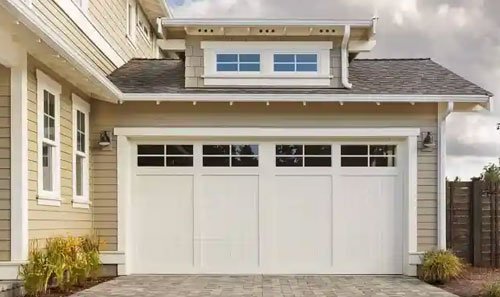
A new steel garage door in the Dallas-Fort Worth area typically costs between $922 and $5,200. The low end covers a basic single door with standard hardware and no insulation. The high end covers a large insulated double door with custom panels, windows, and upgraded hardware. Size, insulation level, panel style, and the number of accessories all move the price. This guide breaks down what changes the cost, what a fair quote includes, and how to avoid paying more than you should for the same door.
What determines the cost of a new steel garage door
The price of a new steel garage door depends on several factors working together. Door size is the biggest one, since a single car opening costs less material and labor than a double car opening. Insulation level matters too: a door with foam core insulation and a higher R-value costs more than an uninsulated steel panel. Panel style, whether it is a plain flat design or a raised carriage house look, also changes the price, along with the gauge of steel used in construction.
Hardware and finish options add up as well. Decorative hinges, handles, and window inserts raise the total, and custom paint colors beyond standard white can cost more than factory finishes. The type of track system, whether standard lift or high lift for taller ceilings, factors in too. Compatibility with an existing garage door opener, or the need for a new opener, can shift the final number in either direction.
A basic single door install compared to a custom high-end job
A low-end installation usually involves a single car steel door in a standard size, non-insulated, with a flat panel design and basic hardware. The homeowner is often replacing an older door that still fits the existing opening and track, so there is little modification needed. This kind of job typically lands closer to the lower part of the price range, since labor and materials stay simple.
A high-end installation usually involves a double car door, insulated with a higher R-value core, and a carriage house or custom panel design. Add windows, decorative hardware, and a non-standard color, and the material cost alone climbs. If the opening needs structural adjustment, or the existing track and opener need upgrading to match the new door, labor time increases as well, pushing the job toward the top of the range.
What a written installation quote needs to spell out
Before any work begins, a proper quote should identify exactly what door you are getting and what it will take to install it. Vague language like standard door or basic install without specifics is a sign the quote needs more detail. A written estimate protects both the homeowner and the installer by setting clear expectations for the job.
- Door model, size, and steel gauge
- Insulation type and R-value if applicable
- Track type and hardware included
- Labor cost separate from material cost
- Removal and disposal of the old door
- Warranty terms on both parts and labor
Signs an installation quote is cutting corners
A quote given over the phone without measurements or a site visit is often incomplete, since steel door pricing depends on exact opening size and structural condition. If the number seems far below what a comparable door usually costs, ask what is missing, because it may not include disposal of the old door, hardware, or labor.
Watch for quotes that do not mention insulation type, panel gauge, or warranty coverage. A door listed only by price with no model or spec sheet attached makes it hard to compare against other options. If the installer cannot explain what happens if the opening needs adjustment or the track needs replacing, the final bill can end up higher than expected once work starts.
Repairing your current door or installing a new one
Not every damaged door needs full replacement. If the panels are dented but the frame and track are sound, panel replacement in the $250 to $800 range may solve the problem. The same goes for a door with a broken spring, worn rollers, or a bent track: those repairs usually cost far less than a new installation and can extend the life of a working door for years.
Replacement makes more sense when the door is rusted through in multiple spots, the panels are cracked or separating, or repair costs are stacking up faster than the door is worth. An older door that no longer insulates well or does not match a newer opener can also be a case where installing new saves money over time compared to repeated repair calls.
What you can inspect yourself before calling for an installation quote
You can measure the width and height of your garage opening and note the ceiling clearance above the door, since headroom affects which track systems will fit. Take a look at the current door for visible rust, cracked panels, or gaps at the bottom, and check whether your opener is more than a few years old, since that affects whether it can pair with a new door.
Leave anything involving the torsion spring, cables, or track alignment to a technician. These parts hold heavy tension and can cause serious injury if handled without the right tools and experience. If your current door is stuck, off track, or making grinding noises, do not force it open or closed, and avoid disconnecting the opener yourself before a technician looks at the whole system.
How the in-home visit turns into a confirmed installation price
A technician measures the opening, checks the condition of the track, opener, and surrounding frame, and asks about your goals for insulation, style, and budget. This walkthrough is what turns a general price range into a specific number for your house, since two openings that look similar on paper can need different hardware or structural work.
Once the inspection is done, the technician explains the options and what each one costs before any work begins, so you know the price up front and can decide what fits your budget. Garage Door Reaper offers same-day appointments when scheduling allows, and covered installation work comes with a 12-month warranty. You can reach the office at (214) 307-6420 to set up a visit.
Why putting off a door replacement raises the price
A door that is rusting, sagging, or no longer sealing well tends to get worse gradually, not all at once. Small rust spots spread, gaps let in more weather and pests, and a door that struggles to open puts extra strain on the opener motor. What starts as a door replacement can turn into a door and opener replacement if the wear is left unaddressed.
Energy loss is another cost that adds up quietly. An old, uninsulated, or poorly sealed door lets heat and cold pass through more easily, which shows up in utility bills over time. Replacing the door before it fails completely also means you can plan the job and the budget, instead of dealing with a door that will not open at all.
Frequently asked questions
How long does a steel garage door installation take?
Most single door installations take a few hours to complete, while double door installations or jobs that need track or opener adjustments can take longer. The technician will give you a time estimate during the visit once the scope of work is confirmed.
Can I install a steel door on my existing track and opener?
Sometimes, if the track is in good condition and the opener is rated for the new door weight. The technician checks this during the inspection and will tell you if the existing track or opener needs to be replaced along with the door.
Does the price include removing my old garage door?
It should, but not every quote includes it automatically. Ask whether removal and disposal of the old door are part of the total cost before work begins, since this is one of the details that can get left out of a lower quote.
Is a steel door a good choice for a Texas garage?
Steel doors hold up well against heat, sun exposure, and daily use, and insulated versions help manage temperature swings inside the garage. The right gauge and finish depend on your climate exposure and how much direct sun the door gets during the day.
What size garage door do I need?
Standard single doors are usually around 8 to 9 feet wide, and standard double doors are around 16 feet wide, but actual openings vary by house. Measuring your current opening, or having a technician measure it, gives you the exact size needed.