
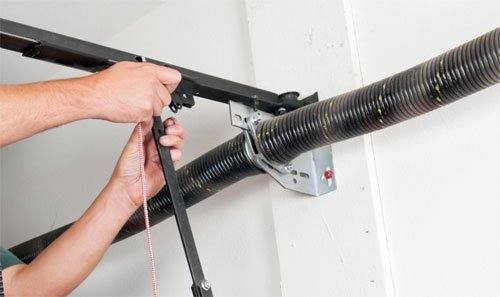
In the Dallas-Fort Worth area, garage door spring replacement typically runs $150 to $450. The number depends on whether one spring is broken or both, the type of spring the door uses, and the size and weight of the door itself. A simple single spring swap on a standard door lands at the low end. A heavier insulated door, a matched pair of torsion springs, or added wear on cables and rollers pushes the price toward the high end. Every job should start with a full inspection, not a phone guess.
What determines the cost of a spring replacement
The price of a spring job comes down to a handful of specific things: the type of spring, torsion or extension, the number of springs the door needs, the size and weight of the door, and how many cycles the spring is rated for. A single lightweight door with one spring costs less to fix than a heavy insulated double door that uses two torsion springs.
Door age and condition also matter. If cables, rollers, or the bottom bracket have worn out alongside the spring, those parts get added to the job. A technician who inspects the full system before quoting will catch this up front, which is why two houses on the same street can get different prices for what sounds like the same repair.
What a low end job and a high end job each look like
A low-end job usually involves a single-car door with one extension spring that has simply worn out from normal use. The door itself is in good shape, the tracks are straight, and the rollers and cables have plenty of life left. In this case the technician replaces the one spring, tests the door balance, and the job is done in well under an hour.
A high-end job usually involves a heavier double-car insulated door running on a pair of torsion springs, where both springs have failed or are close to it. Add in a worn cable or a bent roller found during inspection, and the price climbs. Commercial-weight residential doors and older doors with outdated hardware also tend to land toward the top of the range.
What a proper quote should include
A quote that is worth trusting spells out exactly what you are paying for before any work starts. That means naming the spring type and size, stating whether one or two springs are being replaced, and listing any additional parts the inspection turned up. If the number on the invoice does not match what was explained out loud, ask before agreeing to the work.
- Spring type: torsion or extension, and the size or wire gauge
- Number of springs being replaced, one or a matched pair
- Cycle rating of the replacement spring
- Any additional parts needed, such as cables or rollers
- Total labor and parts cost confirmed before work begins
- Warranty terms in writing
Signs a cheap quote will cost more later
A price that sounds too good usually skips something important. Watch for a quote given without the technician measuring the door or looking at the spring in person, a spring size that is not specified, or a total that does not mention parts and labor separately. These are signs the number was pulled out of the air rather than based on your actual door.
The real cost shows up later. A mismatched or undersized spring wears out fast, sometimes within months, which means paying for the same repair twice. It can also throw off the door balance, which puts extra strain on the opener and leads to a second bill you did not plan for.
When repair makes sense and when replacement makes more sense
If the door itself is straight, the tracks are in good shape, and the panels are not damaged, replacing the spring is almost always the right call, even if the door is older. Springs are a wear item and failing on schedule does not mean the door is failing.
Replacement starts to make more sense when the spring repair is one of several problems at once, such as rusted tracks, damaged panels, or an opener that is also failing. At that point, comparing the running total of repairs against a new door installation, which typically runs $922 to $5,200, is worth doing before approving more repair work.
What you can check yourself and what to leave alone
Before calling, you can safely check a few things: listen for grinding or popping sounds when the door moves, note whether the door feels unusually heavy when lifted by the automatic opener, and look at the spring from a distance for an obvious gap where it has snapped in two. Writing down what you notice helps the technician diagnose faster.
Do not touch the spring itself, and do not try to adjust, loosen, or remove it. A garage door spring, especially a torsion spring, holds a large amount of tension and can cause serious injury if it releases while someone is working on it without the right tools. This is a job for a technician, not a weekend project.
How the visit and price confirmation work
When a technician arrives, the visit starts with an inspection of the whole door system, not just the spring, since a broken spring often puts stress on cables, rollers, and the opener too. After the inspection, the technician explains what is actually going on and confirms the exact price before any work begins, so there are no surprises on the invoice. Same-day appointments are available when the schedule allows, which matters most for a door that will not open at all.
Covered repairs come with a 12-month warranty, and the price you agree to before work starts is the price you pay. If you want to ask questions before scheduling, call (214) 307-6420 and describe what the door is doing.
Why waiting longer costs more
A broken spring does not stay a small problem for long. Without it, the opener has to lift the full weight of the door on its own, which strains the motor and gears with every use. Cables can also snap under the uneven load, and a door left off balance can jump its track.
What starts as a $150 to $450 spring job can turn into an opener repair, a cable repair, and a track repair combined, all because the door kept getting used after the spring failed. Scheduling the fix as soon as you notice the problem keeps the job contained to the spring itself.
Frequently asked questions
How long does a garage door spring last?
Most torsion and extension springs are rated for a certain number of open and close cycles, often several thousand. In everyday residential use that usually works out to somewhere between 7 and 12 years, though heavy daily use shortens that.
Can I replace just one spring if I have two?
It is possible, but most technicians recommend replacing both at the same time if the door uses a matched pair. One spring is usually close behind the other in wear, and mismatched springs throw off the door balance.
Why do garage door springs cost more than other parts?
Springs have to be matched precisely to the weight and size of your specific door, and torsion spring installation requires special tools to manage the tension safely. That precision and the tools involved add to the cost compared to simpler parts.
Is it normal for the price to change after inspection?
Yes, if the inspection finds worn cables, rollers, or hardware alongside the broken spring. A technician should explain any change and confirm the new total with you before doing additional work, not after.
Does the type of door affect the spring cost?
Yes. A heavier double-car or insulated door needs stronger springs, often a matched pair, which costs more than the single lighter spring used on many standard single-car doors.