
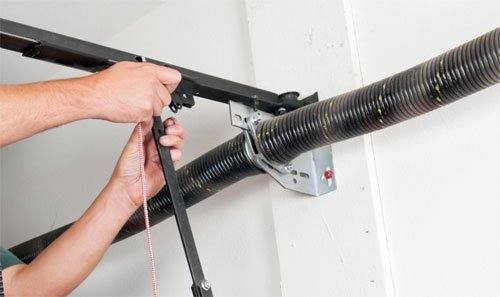
Garage door spring replacement in the Dallas-Fort Worth area typically falls between $150 and $450. The main factor is whether one spring failed or both need to come out, along with the type, size, and cycle rating of the springs your door uses. A single spring on a lighter residential door sits near the low end. A matched pair of heavy-duty torsion springs on a large or double-wide door pushes toward the top of the range. Wire gauge, spring length, and how easy the springs are to reach also factor in.
What determines the cost of single or double spring replacement
Most garage doors use either one long torsion spring mounted above the opening or two smaller springs, one on each side. A single spring job usually means one part to remove and one to install, which keeps labor time down and lands near the lower end of the price range. When both springs need replacing, or the door uses a set that only works as a matched pair, the parts cost and the labor time both go up.
Spring type matters too. Torsion springs mounted on a shaft above the door are more common on heavier doors and cost more to replace than extension springs, which run along the horizontal tracks. Wire gauge and coil length are matched to the weight of your specific door, so a heavier insulated door or an oversized double door usually needs a stronger, more expensive spring than a standard single door.
A single spring job and a double spring job compared
On the low end, picture a single torsion spring on a standard one-car door that snapped from normal wear. The technician removes the one broken spring, installs a matching replacement, tests the balance, and adjusts the opener's force settings. This kind of job, with straightforward access and no other worn parts, typically lands between $150 and $250.
On the high end, picture a double door with two torsion springs that are original to the house and both showing wear, not just the one that broke. Replacing both at once, along with worn end bearings or a bent shaft that is affecting the springs, adds parts and labor time. This kind of job commonly runs between $350 and $450, especially on heavier insulated doors.
What a complete spring replacement quote should spell out
A clear quote should tell you exactly what you are paying for before any work starts. That means naming the number of springs being replaced, the spring type and size, and whether the price includes a safety check of the cables, rollers, and hardware that work alongside the springs.
- Number of springs being replaced, one or both
- Spring type and size matched to your door weight
- Labor cost separate from parts cost
- Whether cables, drums, or bearings are inspected as part of the job
- Whether the opener's force and limit settings will be adjusted after the install
- What the warranty covers and for how long
Warning signs in a spring replacement quote that looks too low
A price that is far below the typical range is worth a second look. Some quotes leave out labor and only cover the part, which turns into a surprise charge once the technician is on site. Others use undersized or mismatched springs that fail again within months, which ends up costing more than paying a fair price the first time.
Be cautious of a quote that will not say whether it covers one spring or two, or one that skips any mention of testing the door's balance after the install. A door that is not properly balanced puts extra strain on the opener and can cause the new spring to wear out faster than it should.
Replacing one spring or replacing both springs at once
When only one spring has failed on a two-spring system, some homeowners want to replace just that one to save money up front. The problem is that the second spring is usually close behind, since both springs go through the same number of open and close cycles. Replacing only one often means paying for a second service call within a year or two.
Most technicians recommend replacing both springs together on a two-spring door, even though it costs more at the time. This keeps the springs matched in strength and age, which keeps the door balanced and reduces strain on the opener. On a single-spring door, replacing just the one spring is standard and does not carry the same tradeoff.
What you can check on your springs and what to leave alone
You can safely look at your springs from a distance to check for an obvious gap in the coil, which usually means the spring has broken. You can also watch how the door moves: a door that feels heavy, closes unevenly, or drops suddenly partway down is often a spring problem worth calling in.
Do not attempt to touch, adjust, or remove a garage door spring yourself. Torsion springs are wound under heavy tension and can cause serious injury if they release suddenly. Leave any work on the spring, the winding cones, or the mounting hardware to a technician with the right tools.
How the spring replacement visit and price confirmation work
When a technician arrives, they inspect the whole door system, not just the broken spring. This includes checking the cables, rollers, tracks, and opener, since a failed spring can put extra strain on those parts. They will explain what they find, walk through the repair options, and confirm the exact price before any work begins.
Garage Door Reaper offers same-day appointments when they are available, which matters for a broken spring since the door usually cannot be opened or closed safely until it is fixed. You can reach the office at (214) 307-6420 to check availability and get a technician scheduled.
Why waiting on a broken spring raises the cost
A broken spring does not fix itself, and using the door anyway puts strain on the opener, cables, and rollers that are not built to lift the door's full weight on their own. What starts as a single spring replacement can turn into an opener repair or cable repair if the door keeps getting forced open and closed.
Garage Door Reaper backs covered spring replacement work with a 12-month warranty, which gives you a window to catch any issue with the install without paying twice. Waiting weeks or months after a spring breaks removes that kind of protection against a small problem growing into a bigger repair bill.