
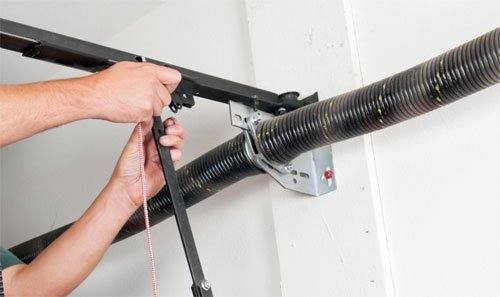
In the Dallas-Fort Worth area, high-cycle spring replacement typically runs $150 to $450. High-cycle springs are built to open and close far more times than a standard spring before they wear out, which makes them worth considering if your household uses the garage door many times a day or if you run a business through it. Where you land in that range depends on the spring type, whether both springs need replacing, and what shape the rest of the door system is in.
What drives the cost of a high-cycle spring upgrade
The price of a high-cycle spring job moves based on a handful of factors: the cycle rating you choose, whether your door uses one spring or two, the weight and size of the door, and whether existing hardware, like the center bracket or cable drums, needs replacing along with the spring. A heavier two-car door under constant daily use pushes toward the top of the $150 to $450 range.
Standard residential springs are usually rated for around 10,000 cycles, while high-cycle springs can be rated for 20,000, 30,000, or more. The higher the rating, the more the spring itself costs, and that difference carries through to the final price. Door age, access to the spring, and whether the technician finds worn cables or rollers while working also factor into the total.
A simple high-cycle spring job compared to a demanding one
At the low end of the range, a single door with one torsion spring in otherwise good condition gets upgraded to a mid-rated high-cycle spring. The technician swaps the spring, checks the door balance, and tests it under normal operation. Nothing else on the system needs attention, and the job is usually finished in under an hour.
At the high end, a two-car door with two springs gets upgraded to a high-rated spring built for heavy daily use, and the technician also finds a worn cable or a bent bracket that needs replacing at the same time. Heavier doors, older hardware, and higher cycle ratings all add cost, and replacing two springs instead of one roughly doubles the material cost.
What a proper high-cycle spring estimate needs to include
A written estimate for high-cycle spring work should tell you exactly what you are paying for before any work starts. If a quote only gives you one number with no breakdown, ask what it covers and what it does not.
- The cycle rating of the spring being installed
- Whether one or both springs are being replaced
- Labor listed separately from parts
- Any additional hardware included, such as cables, bearings, or brackets
- Confirmation that the door will be balanced and tested after installation
Signs a high-cycle spring quote is too low to be real
A price well under $150 for a genuine high-cycle spring should raise questions. Sometimes it means the quote is actually for a standard-cycle spring mislabeled as high-cycle, which will wear out far sooner than expected and cost you again down the line.
Other times a low number simply does not include the second spring, hardware inspection, or a balance check, and those items get added once the technician is already at your house. Ask directly whether the quoted price is the full price for parts and labor, or a starting point that assumes nothing else is wrong with the door.
Repairing standard springs versus upgrading to high-cycle springs
If your current springs are standard and still within their expected cycle life, a straight repair or like-for-like replacement is usually the more affordable choice, and it fits toward the lower end of the $150 to $450 range.
Upgrading to high-cycle springs makes more sense if your door cycles many times a day, such as a household with several drivers or a business that keeps the door moving throughout the day. The higher upfront cost spreads out over a longer service life, which can mean fewer repair calls over the years the springs are in use.
What you can safely check on your spring setup, and what to leave to a technician
You can watch how the door moves and listen for changes in sound. A door that struggles to lift, closes faster than it used to, or makes a loud bang when the spring gives out are all signs of a failing spring. You can also keep track of roughly how many times a day the door opens and closes, since that number helps determine whether a high-cycle spring is worth the extra cost.
Do not attempt to adjust, remove, or wind a torsion spring yourself. These springs hold a significant amount of tension, and handling them without the right tools can cause serious injury. Leave any hands-on work with the spring, cable, or drum to the technician.
How the visit and price confirmation work
When the technician arrives, they inspect the whole door system, not just the spring. That includes checking the cables, rollers, tracks, and opener, since a failing spring often puts extra strain on other parts of the door.
Once the inspection is done, the technician explains what they found, walks through the options, and confirms the exact price before any work begins. Covered work comes with a 12-month warranty, so you know what is protected if something goes wrong after the visit.
Why waiting to upgrade your springs usually costs more
A spring nearing the end of its cycle life does not fail all at once. It shows warning signs first, like slower movement or a door that feels heavier than usual to lift by hand. Waiting through those signs increases the odds that the spring snaps while the opener is under load, which can damage the opener motor or bend the track.
If your spring is showing wear and your schedule is tight, same-day appointments are available when a technician has an opening, which limits how long the door is out of service. Addressing a weak spring before it fails usually costs less than an emergency repair after it breaks and takes other parts of the door with it. If you want a number based on your own door, call (214) 307-6420 and describe how often it is used.
Frequently asked questions
What is a high-cycle spring, and do I actually need one?
A high-cycle spring is built to handle more open and close cycles than a standard spring, often 20,000 or more compared to around 10,000. If your door opens many times a day, it can reduce how often you need spring replacement, though it costs more upfront.
Why does spring replacement cost vary so much within the $150 to $450 range?
The range reflects differences in cycle rating, whether one or two springs are replaced, door weight, and whether other hardware needs attention at the same time. A single standard-weight door job lands lower, while a heavier two-spring door with extra hardware lands higher.
Can I replace just one spring if only one has failed?
It depends on the age and cycle count of the other spring. If both springs are close in age, replacing both at once is usually recommended, since the second one is likely close to failing too. The technician can tell you what makes sense for your specific door.
How long does a high-cycle spring installation take?
A straightforward single-spring job typically takes under an hour. A two-spring replacement with additional hardware work can take longer. The technician gives you a time estimate along with the price before any work starts.
What happens if a spring breaks while the door is in use?
The door can come down suddenly or get stuck partway, and the opener may strain against the extra weight, which can damage the motor. This is why addressing a spring showing warning signs early usually costs less than waiting for it to fail.