
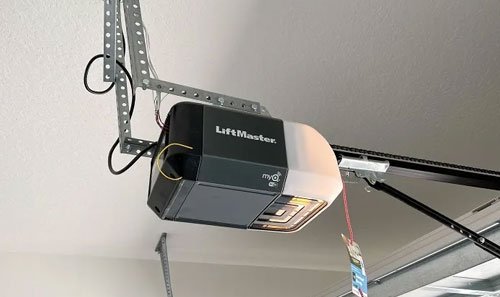
Garage door opener replacement in the Dallas-Fort Worth area typically costs $400 to $800. The price depends on whether you choose a chain drive, belt drive, or direct drive unit, how much horsepower the door needs, and whether the technician has to remove an old opener with damaged wiring or a mounting bracket that no longer fits. Battery backup, Wi-Fi connectivity, and rail length also affect the final number. A technician inspects your full door system and confirms the price before any work begins.
What determines the cost of an opener replacement
The price of a new garage door opener depends on a handful of factors that add up fast. Chain drive openers are the least expensive option and work well for standard residential doors. Belt drive openers cost more but run quieter, which matters if a bedroom sits above or next to the garage. Horsepower matters too: a heavier wood door or an oversized double door needs a stronger motor than a single steel door. Extra features like a battery backup, Wi-Fi app control, or a rolling code keypad each add to the base price.
Labor is the other half of the number. If the old opener bolts on the same way the new one will, the job goes faster. If the mounting bracket is bent, the rail is too short, or the wiring to the wall switch is old and brittle, the technician has to spend more time on the swap. Ceiling height and whether the garage has finished drywall around the opener location also change how long the install takes.
A low-end opener job compared to a high-end opener job
At the low end of the range, around $400, you are usually looking at a standard chain drive opener going into a single garage with an existing bracket and wiring that are already in good shape. The technician swaps the unit, sets the force and travel limits, and tests the safety reversal. No extra parts are needed and the job usually wraps up in a couple of hours.
At the high end, near $800, you are typically dealing with a belt drive or Wi-Fi enabled opener going into a double door, plus a new rail, a new mounting bracket because the old one is damaged, and rewiring for a wall control that was never installed correctly. Heavier doors also need a stronger motor, which costs more than a standard half horsepower unit.
What a proper quote must include
A written quote should name the brand and model of opener being installed, the horsepower or equivalent lifting force, and the drive type, chain, belt, or screw. It should also state whether a new rail, new mounting bracket, or new wall control is included, since these are common add-ons that get left off a lowball number.
The quote should also spell out labor separately from parts, list what happens to the old opener, and state the warranty terms in writing. At Garage Door Reaper, covered work carries a 12 month warranty, and the price is confirmed with you after the technician inspects the door system, before any work starts.
Signs a cheap opener quote is cutting corners
A quote that is far below the $400 to $800 range for a real installation, not just a repair, often means a low horsepower unit is being substituted for a door that needs more lifting power. It can also mean the rail or mounting hardware is being reused when it is worn out, which leads to a noisy or unreliable opener within months.
Watch for quotes that do not separate the opener price from installation labor, that skip mention of safety sensor testing, or that do not say anything about warranty coverage. A number given over the phone without anyone looking at your door, your ceiling height, or your current wiring is a guess, not a real price.
Repairing your opener versus replacing it
If the opener is only a few years old and the problem is a burned out circuit board, a bad capacitor, or a worn drive gear, repair is usually the cheaper route and falls in the $75 to $300 opener repair range. Replacement makes more sense once the motor itself is worn out, the unit is more than ten years old, or replacement parts are no longer made for that model.
Repeated repairs on the same opener are also a sign that replacement will save money over time. If a technician has already been out once or twice for the same noise or failure, putting that repair money toward a new unit with a fresh warranty often makes more sense than a third fix on old parts.
What you can check before calling and what to leave alone
There are a few simple things you can check yourself before calling for service. None of them require touching electrical wiring or the spring system.
Leave the opener's internal wiring, the circuit board, and the drive gear assembly alone. These carry electrical current and require the cover removed correctly to avoid damage. The garage door spring system should never be touched by a homeowner, regardless of what is going on with the opener, since it is under heavy tension.
- Confirm the wall switch and remote both fail to open the door
- Check that the opener unit is getting power at the outlet
- Listen for the motor running without the door moving, which points to a gear issue
- Look at the safety sensors near the floor for a solid light on both sides
- Note whether the problem started after a storm or power outage
How the visit and price confirmation work
When the technician arrives, the first step is inspecting the whole door system, not just the opener. That means checking the springs, cables, rollers, and tracks, since a failing part elsewhere can look like an opener problem. Same-day appointments are available when scheduling allows, which helps if the door is stuck closed or open.
Once the inspection is done, the technician explains what is actually wrong, walks through the opener options that fit your door and budget, and confirms the exact price with you before any approved work begins. You can call (214) 307-6420 to set up a visit and ask questions about your specific door ahead of time.
Why waiting on a failing opener costs more
An opener that grinds, stalls, or reverses on its own is putting extra strain on the drive gear, the rail, and sometimes the door's own hardware. Waiting on a small opener problem often turns it into a bigger one, since a failing motor can eventually strip the gear completely or burn out the circuit board.
A door that will not open also means the garage is unusable, which is inconvenient for a car and a security concern if the door is stuck partway open. Scheduling a repair or replacement as soon as the opener starts acting up usually keeps the job on the lower end of the price range.
Frequently asked questions
How long does a garage door opener replacement take?
Most opener replacements take two to four hours, depending on whether the old bracket, rail, and wiring can be reused. A straightforward chain drive swap on a single door usually finishes on the faster end, while a double door with new wiring or a mounting bracket replacement takes longer.
Can I install a new opener myself and just have someone do the wiring?
It is possible, but mixing self-installed hardware with professional wiring can create liability questions and make it harder to diagnose problems later. A full professional installation lets the technician confirm the mounting, rail alignment, and safety sensor placement all work together correctly from the start.
Does the opener replacement price include removing the old unit?
Yes, removing and disposing of the old opener is typically part of the installation price. Ask that this is stated in writing on your quote, along with what happens to the old rail and bracket if they are being replaced along with the motor.
What horsepower opener do I need?
Horsepower needs depend on the door's weight and size. A single lightweight steel door usually works fine with a half horsepower unit, while a heavier wood door or an oversized double door often needs three quarter or one horsepower. The technician can confirm the right size for your specific door.
Will a new opener work with my existing remotes and keypad?
Sometimes, but not always. Older remotes may not be compatible with a new opener's rolling code security or frequency. The technician can test your existing remotes and keypad during installation and let you know whether they need to be replaced as part of the job.