
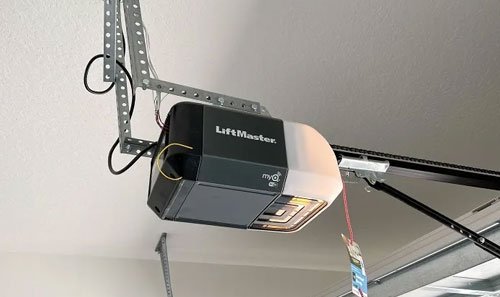
In most cases, the door is not moving because the opener has lost its physical connection to the door, either through a broken spring that leaves the motor too weak to lift the weight, a disconnected or broken trolley, or worn internal gears in the opener. The fix depends on which part failed. Costs on this page run from about $75 for a simple opener adjustment up to $800 for a full opener replacement paired with other worn parts.
Check whether the spring has failed
If the motor hums, clicks, or runs its normal cycle sound but the door itself stays flat on the ground, the first thing to check is the spring. A torsion spring sits above the door on a metal shaft, and an extension spring runs along the upper tracks. When either one snaps, the opener has nothing helping it lift the weight of the door, so it simply cannot move it, no matter how hard the motor works.
A broken spring often comes with a warning sign: a loud bang from the garage, sometimes days or weeks before the door stops working. If you heard that sound recently, a snapped spring is the likely cause. Spring replacement runs from $150 to $450 depending on whether the door uses one spring or two, and whether it is a torsion or extension setup.
Do not try to lift the door manually to test this. A door with a broken spring is heavier than it looks and can drop suddenly. A yearly tune-up, priced from $75 to $175, catches a spring that is close to failing before it snaps and leaves the opener straining.
Listen to what the motor is doing
The sound the motor makes tells you a lot. A steady, quiet hum that stops after a few seconds usually means the opener sensed resistance and shut itself off, which points back to the spring. A grinding or straining sound that continues the whole cycle often means internal gears are stripped, a belt or chain is slipping, or the motor is simply too old and weak for the door it is lifting.
Stripped gears are common in openers that are several years old and have never been serviced. The gear teeth wear down from years of use until they can no longer catch and drive the trolley along the rail. This is a mechanical problem inside the opener unit, not something that resets itself, so the sound will keep repeating every time you try the door.
Opener repair for gear, belt, or motor issues runs from $75 to $300. If the unit is older and the motor housing is cracked or burned, replacement instead of repair may be the better option, and full opener installation runs from $400 to $800.
Inspect the trolley connection safely
The trolley is the small carriage that rides along the rail and connects the motor to the door through the arm. If someone recently pulled the red emergency release cord, the trolley disconnects on purpose so the door can be opened by hand. If that cord was pulled, even by accident, the opener will run normally but the door will not move because the two are no longer linked.
You can safely check this yourself. Look at the rail near the door and see if the trolley is sitting apart from the main carriage arm, or if the release cord is hanging in the disengaged position. If so, follow the reconnect instructions printed on the opener unit or pull the cord toward the motor to re-engage it.
If the trolley looks connected but the arm is bent, cracked, or the plastic piece inside it is broken, that is a parts issue, not a simple reset. Do not force it back into place with tools. Off-track and trolley repair runs from $150 to $400 depending on what needs replacing.
What determines the repair cost in this situation
The price depends on which part actually failed and how many systems are involved. A single snapped spring on a lightweight door is a straightforward job. A stripped gear inside an old opener combined with worn cables or rollers is a bigger job because more than one system needs attention at the same visit.
Door weight and size matter too. A wide double garage door puts more strain on both the spring and the opener than a single door, so parts rated for that weight cost more and take more labor to install correctly. The age and model of the opener also affects price, since older units sometimes need parts that are harder to source than current models.
A low-end scenario and a high-end scenario for this problem
On the low end, a single torsion spring has snapped on a standard single garage door, the opener and trolley are otherwise fine, and the technician swaps the spring, checks the balance, and confirms the door lifts smoothly again. This kind of visit typically lands toward the lower part of the spring replacement range, around $150 to $250.
On the high end, the spring has failed, the cables that run alongside it have frayed from the extra strain, the rollers are worn from years of use, and the opener gear has stripped from working overtime against the broken spring. That combination pushes the job toward $600 to $800 once parts and labor for spring, cable, roller, and opener repair are added together.
Most jobs fall somewhere between these two examples, which is why an in-person inspection matters more than a phone estimate.
Warning signs in a cheap quote
A quote that sounds low before anyone has looked at the door is a signal to ask more questions. Some warning signs point to a job that will end up costing more once the technician actually opens up the system.
Watch for these before agreeing to any work.
- A price given over the phone with no mention of an in-person inspection
- No explanation of which specific part failed, spring, trolley, cables, or gears
- No mention of warranty coverage on the parts or labor
- Pressure to replace the entire opener before checking the spring or trolley first
- No check of cables and rollers even though they carry the same load as the spring
What a proper quote must include
A proper quote is written after the technician looks at the spring, the cables, the trolley, the opener gears, and the tracks, since a door that will not move can involve more than one of these at once. The quote should list each part that needs work, the price for that specific repair, and how the price changes if something else turns up once the cover panel is off.
It should also state what the repair does and does not include, such as whether a new spring comes with a fresh cable set or whether that is priced separately. Work completed under this kind of quote comes with a 12-month warranty on covered repairs, which should be stated plainly before work begins.
Repair is usually the right call when the spring, cable, trolley, or a single gear has failed but the opener motor itself still runs. Replacement of the full opener makes more sense when the motor housing is cracked, the unit is old enough that parts are hard to find, or gears have stripped more than once in recent years.
How the visit and price confirmation work
A technician starts by inspecting the whole door system, not just the part that seems obviously broken, since a spring failure often puts extra strain on cables and rollers nearby. Once the inspection is done, the technician explains what failed, walks through the repair options, and confirms the price before any approved work begins, so there are no surprises once the job is underway.
Same-day appointments are available when scheduling allows, which matters here because a door that will not move usually means the garage cannot be used at all until it is fixed. You can reach the office at (214) 307-6420 to check availability for your area.
Waiting on this kind of problem tends to make it worse. A broken spring left in place puts more strain on the opener motor every time someone tries the door, which can turn a $150 spring job into a $300 opener repair on top of it. A door stuck in the down position also blocks vehicles and can tempt someone to force it open by hand, which risks injury from the sudden weight of an unsupported door.
Frequently asked questions
Why does the motor keep running if the door will not move?
The motor is not connected to enough resistance to know it should stop. This usually happens when the spring has snapped, the trolley has disconnected, or the drive gear inside the opener has stripped and can no longer grab the rail.
Is it safe to try opening the door by hand while this is happening?
Not without knowing the cause. If a spring has failed, the door is heavier than normal and can drop suddenly. Leave the door in place and call for an inspection before attempting to move it manually.
Can I fix a disconnected trolley myself?
If the emergency release cord was simply pulled, reconnecting it is usually safe to try following the instructions on the opener unit. If the trolley or arm looks bent or cracked, that is a parts repair best left to a technician.
How do I know if I need a new opener or just a repair?
If the motor runs but has visible cracks, burning smell, or has stripped gears more than once before, replacement is usually the better long-term value. If this is the first failure and the motor itself sounds fine, repair is typically enough.
Will the price change once the technician opens up the system?
It can, since a spring failure sometimes puts strain on cables or rollers that were not visible from the outside. The technician explains any changes and confirms the final price before starting any additional work.